





Children's barefoot sock shoes through the eyes of a physiotherapist: Healthy feet start in childhood
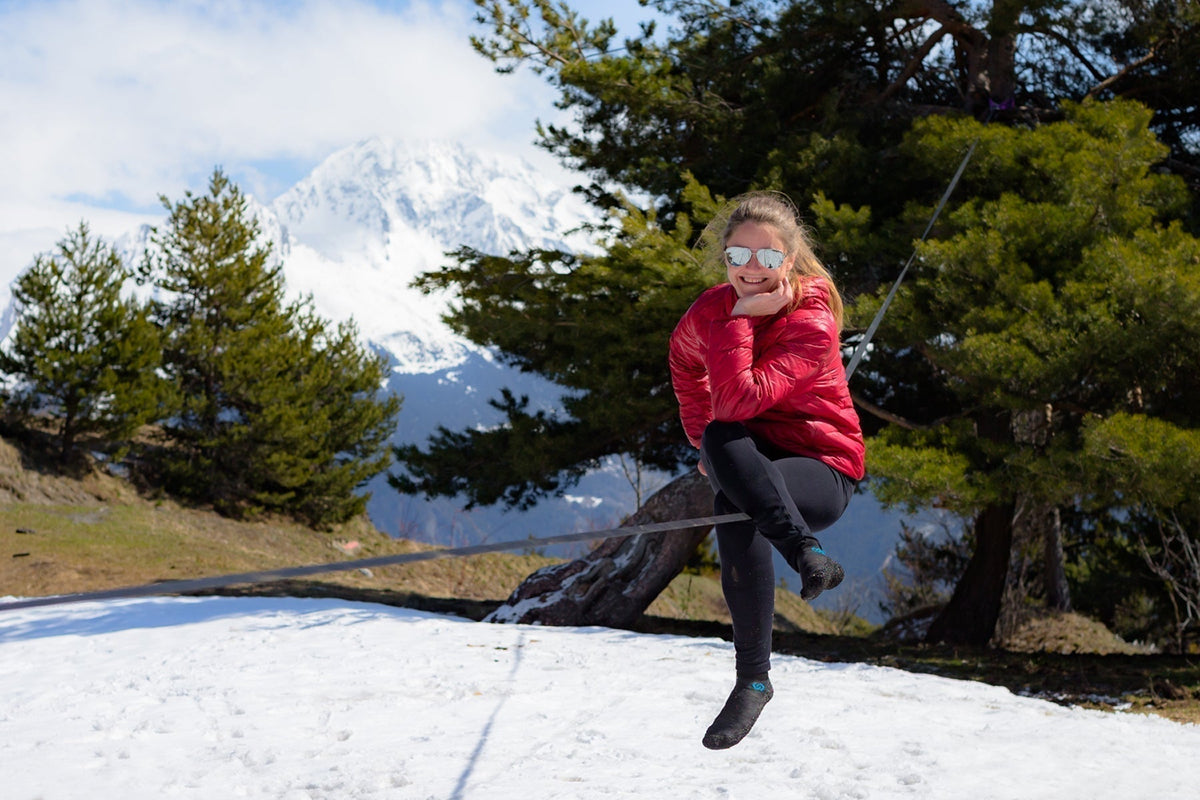
Physiotherapist Tereza Panochová is not only an experienced physiotherapist but also an enthusiastic slackliner. Movement is close to her heart, but her path to physiotherapy wasn't entirely conventional. In this interview she explains why barefoot shoes – and Skinners sock shoes in particular – are a great choice for the healthy development of children's feet, and what role balance plays in our overall health. We asked her everything you need to know about barefoot shoes for kids.
Terka, could you introduce yourself a little? How did you get into physiotherapy and what do you enjoy most about it?
“I'm originally from České Budějovice. I started out studying medicine, but because of health complications I had to interrupt my studies. At 17 I had head surgery and was supposed to rest. But I'm a curious adventurer, so instead of resting I took up slacklining, and I discovered that the sport helps me in many ways. So I decided to study physiotherapy to learn more about my own body.”
Today Tereza combines physiotherapy with balance training and is the author of the Slacklife Therapy project, in which she teaches people of all ages how to work with balance and stability properly.
Slackline therapy? That sounds interesting! What exactly is it?
“It's a combination of physiotherapy, yoga and breathing with balance training on a slackline. It helps not only children to correct their gait and the arches of their feet, but also seniors and people with neurological conditions such as Parkinson's disease. Balance is key to everyday movement, and slacklining is a great tool for improving it.”
What Terka likes most about slacklining is its versatility and the different challenges it offers, whether at height or in the park. In her view, physiotherapy is largely about treating imbalances, and slacklining is all about keeping that balance. It is, in effect, a rehabilitation tool.

How do shoes affect the development of children's feet?
Besides balance training, Tereza focuses on the healthy development of children's feet. In her view, going barefoot is one of the best ways to naturally support good posture.
Why do you think it's important for children to wear barefoot shoes?
“A child's foot is constantly developing, and its shape and function affect the whole posture. If a child spends their childhood in shoes that restrict the movement of the foot, it can affect their ankles, knees and hips, and even the cervical spine. Many people don't realise it, but poor footwear in childhood can lead to back pain or other musculoskeletal problems in adulthood. Barefoot shoes allow the feet to move naturally and activate muscles that often get lazy in conventional, rigid shoes.”
Terka goes on to explain that a child's foot keeps growing, which gives a therapist plenty to work with. In her view the human body is incredible. How often do we fail to realise how much the choice of shoes alone can influence?
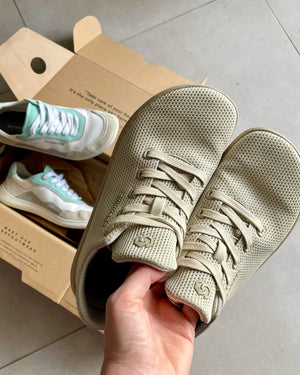
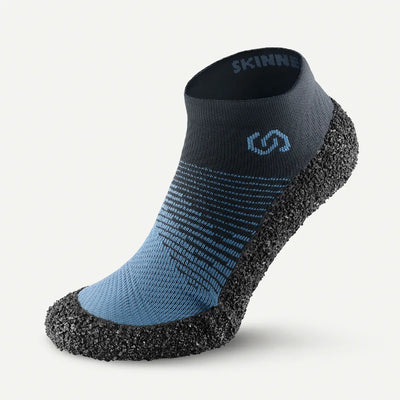
Do you want healthy feet for your child? Start with the right shoes from an early age. Barefoot sock shoes support the natural development of children's feet and healthy movement. Explore the Skinners kids' models.
How are children's sock shoes different from regular children's shoes, in your opinion?
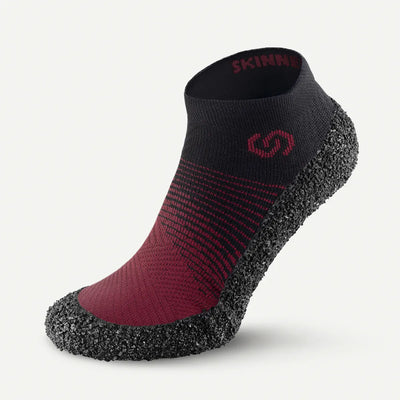
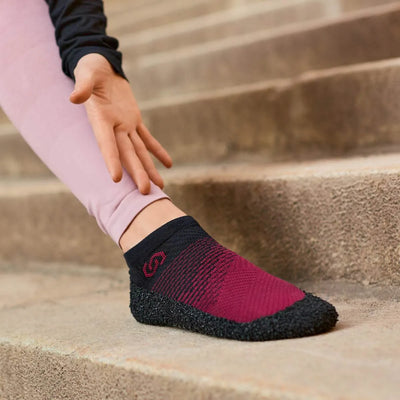
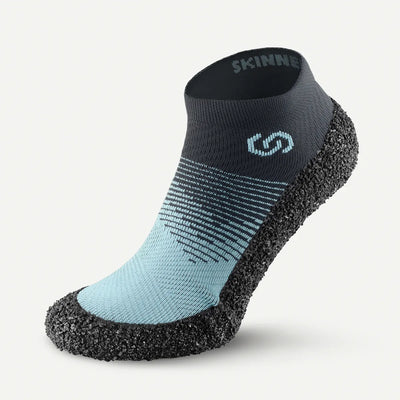
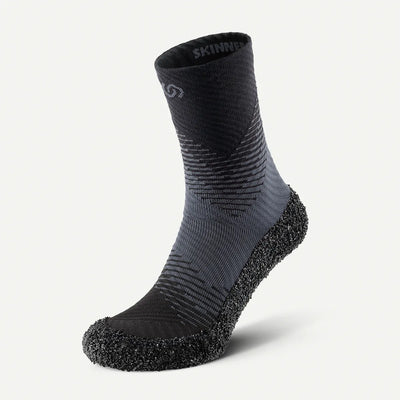
“They're flexible, they don't restrict the movement of the foot and they adapt to it. They're also versatile – kids can wear them outdoors, at school as indoor shoes or in the gym. And what I like most about them is that they're a great substitute for walking barefoot, which is so important for children's development.”
How do you see Skinners as an alternative to walking barefoot? Are they natural enough?
“All the properties children's sock shoes have are important for proprioception, which is the ability to sense the position of your body in space. When a child walks in rigid shoes with a hard sole, they lose this natural feedback.”
Terka adds that walking barefoot has many benefits, but conditions aren't always ideal for it – whether because of the weather or the surface. In her view, sock shoes are a great option for natural movement while still protecting children's little feet.

Why start with barefoot? Choose the right path.
Many people want to switch to barefoot shoes but often don't know how.
If someone wanted to start wearing barefoot shoes, what should they watch out for?
“I recommend starting slowly. Maybe just an hour on the first day, then gradually building up. Sometimes people aim to cover a certain distance as quickly as possible, but they pick up a lot of bad habits in the process. So if you want to walk well and for a long time, give yourself time to discover your body's balance. If you've worn rigid shoes with arch support all your life, your feet aren't used to working.”
Tereza notes that the switch to barefoot should be gradual, like any other training for the body. We wrote about why to wear barefoot in more detail in our article here.
Skinners on a slackline and in the mountains?
Terka tested Skinners sock shoes not only when working with children, but also in her own training.
How do Skinners sock shoes help you when slacklining? Do you see any advantages?
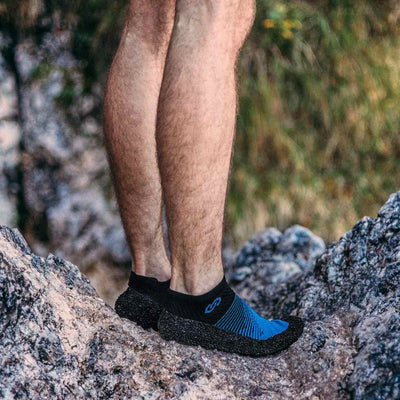
“I've tried Skinners both on a slackline and on a mountain hike. They protect your foot from being cut by the slackline or stones on the trail, yet you can still feel exactly where you're stepping. That makes it easier to work with balance.”
Proprioception, the ability to sense your own body in space, is key to maintaining stability.
“I often see children and adults struggling with balance because their feet don't work the way they should. Skinners help wake up the muscles in the foot and teach us to feel the ground under our feet again.”
“For example, I also tested Skinners on the first big hike I took my dog on, when he was 5 months old. We climbed a peak at 2,400 m above sea level, but puppies don't know how to save their energy, so he had to be carried a lot. A backpack on my back, plus an eleven-kilo dog over my shoulder or in my arms. The sock shoes got a real stress test. And they passed it with flying colours.”

Children and movement: how to motivate them?
In her practice, Tereza sees that children today spend less time moving and more time in front of screens.
How can parents motivate children to move?
“The best motivation is to lead by example. Children learn by imitation. If parents spend their time actively, children will naturally join in. Movement should be part of family life – whether it's a trip into nature, climbing trees or exercising together.”
In her view, movement is the key to health – both physical and mental. She adds that it's important for children to build a positive relationship with movement and learn to look after their bodies.
Skinners as a path to natural movement
Physiotherapist Tereza Panochová is proof that movement is not just a necessity but a joy. Slacklining helped her understand how important it is to have stable, strong feet. That's why she prefers barefoot shoes, which strengthen natural balance. And Skinners children's sock shoes can be the first step towards healthier feet, and not just for your children.
More articles
 SHOES
Roughly one in four adults has a bunion. We explain why it develops, what barefoot shoes can do about it, which exercises and s...
Read article SHOES
Looking for men's winter shoes that handle frost, mud and the city? We show you how winter barefoot shoes keep you warm, how Du...
Read article BAREFOOT START
Remember when barefoot shoes looked more like part of a clown costume? Today you no longer have to choose between comfort and w...
Read article