





Skinners Essentials 2.0 in practice: packable sock-shoes for camping and water
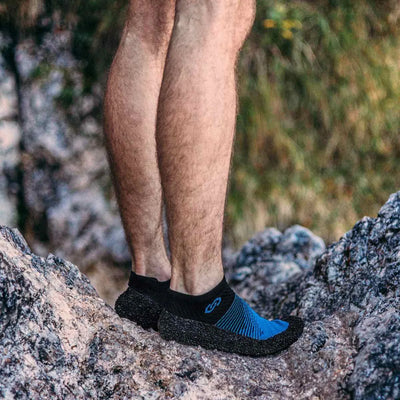
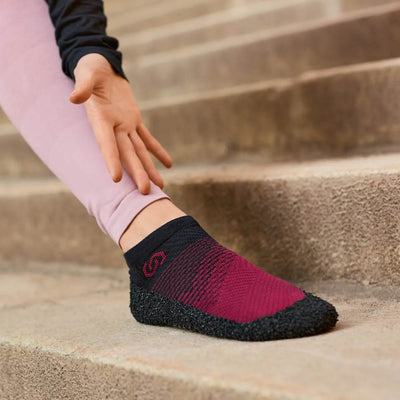
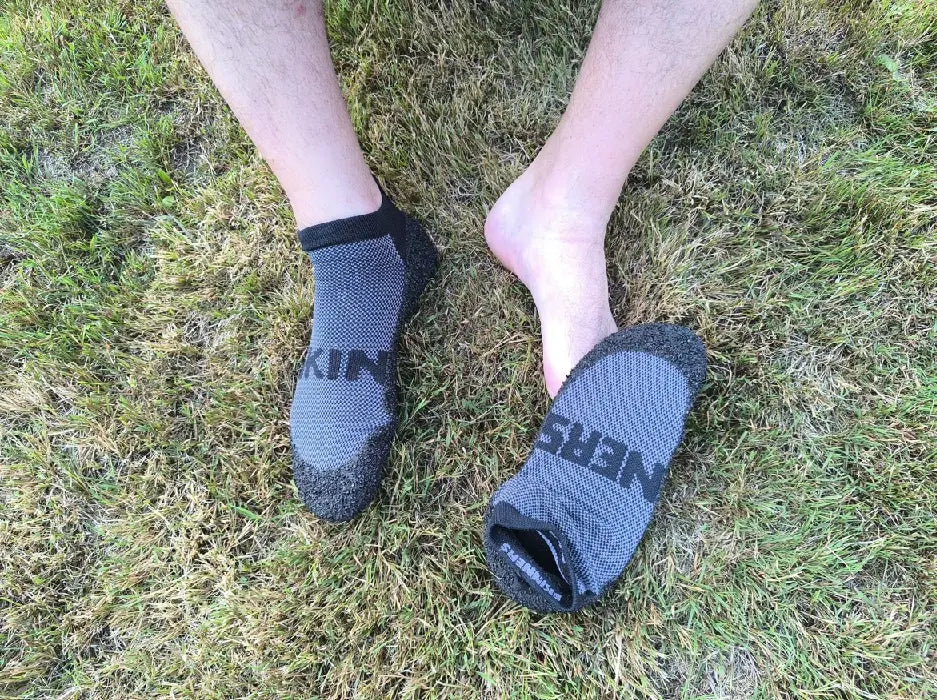
We tested Skinners Essentials 2.0 as lightweight second footwear for situations where you would rather not add regular sandals or trainers to your backpack. The reviewer wore the Concrete colourway in size 45–46, his wife the Grape version in size 38–39.
The sock-shoes were used at a campsite, around the tent, on grass, soil, sand and fine gravel. Walking in water and on a rocky bottom was an important part of the test. At the same time, we were able to compare the fit with the older Skinners Comfort 2.0 model.

Quick summary of the experience
Skinners Essentials 2.0 worked best as packable additional footwear for camping, the beach and the water. They take up minimal space in a backpack, they held well on the foot in water, and on a rocky bottom they protected the feet from small stones.
For shorter wear they were comfortable and the heel stayed in place. The most attention needs to go to the right size and to instep shape. The looser men's version creased more visibly on the foot, while the smaller women's version sat more naturally.
For a full day of hiking or demanding rocky terrain we would choose sturdier footwear. As a second pair around the tent, while travelling or for moving through water, Essentials 2.0 did their job well.
- Biggest plus: minimal packed volume and good usability in water.
- Practical advantage: removable insole and storage pouch.
- Main limit: they are not a replacement for solid hiking boots.
- Worth knowing: with a higher instep, putting them on can be harder.
- Best use: camping, around the tent, the beach, water and light second footwear for travelling.
Transparency: This text is based on practical testing by Outdoor-Recenze.cz. Skinners provided the sock-shoes for testing and they remain part of the testers' gear afterwards. The review describes real experience from use, including what worked well as well as the limits of use.
Basic information and tested versions
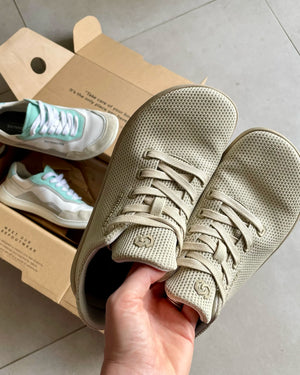
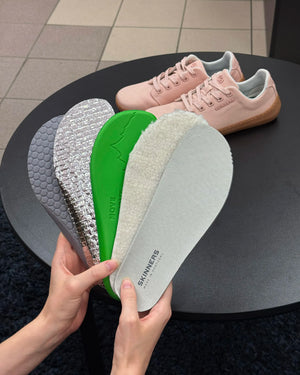
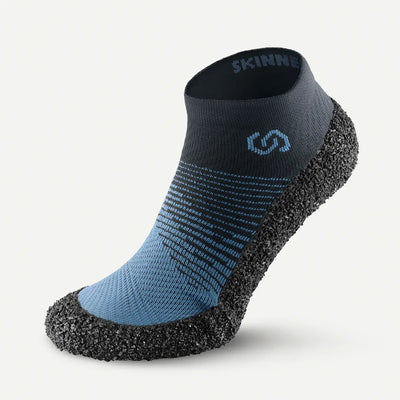
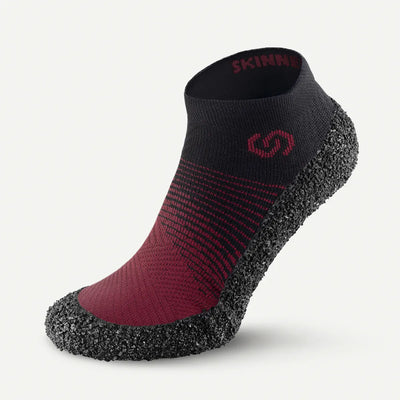
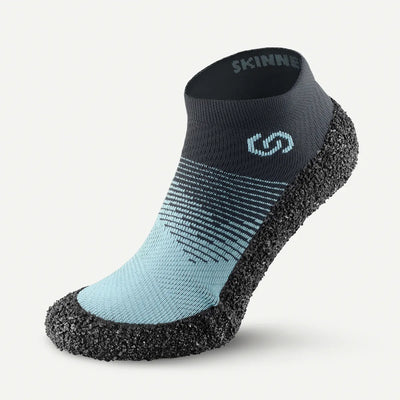
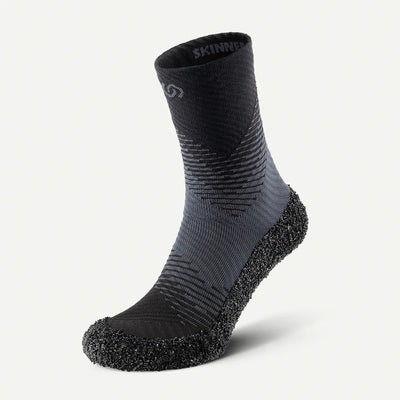
Essentials 2.0 combine a knitted, sock-like upper with a flexible protective layer on the underside of the foot. The package includes a removable perforated insole and a storage pouch. It is best to pick a size without the usual extra room, because sock-shoes are meant to fit closely, much like socks.
| Model | Skinners Essentials 2.0 |
|---|---|
| Tested colours | Concrete and Grape |
| Men's size | 45–46 (regular shoe size 45 to 45.5) |
| Women's size | 38–39 (regular shoe size 39) |
| Total time worn | more than 3 hours |
| Individual sessions | roughly 30 to 60 minutes |
| Surfaces | grass, soil, sand, gravel, water and rocky bottom |
| In the box | sock-shoes, removable insoles and storage pouch |
| Direct comparison | Skinners 2.0 Comfort in size 45 |

How the test was carried out
Essentials 2.0 served as second footwear during time spent outdoors. The goal was not to replace hiking boots with them, nor to cover a multi-day march. The point was to check the situations in which packable footwear like this makes the most sense.
Both pairs were worn around the tent, during normal movement at the campsite and on various natural surfaces. In water we looked at grip on the foot, protection from the rocky bottom, how the wet material behaved and how it dried afterwards.
The reviewer is roughly 190 cm tall and weighs around 95 kg; his wife is roughly 170 cm and 70 kg. The different sizes and foot shapes made it possible to compare how the fit changes depending on the chosen size range.
Putting them on and the shape around the instep
On the first fitting, both versions had a firmer transition over the instep area. The sock-shoes need to be pulled over the foot gradually and the material then straightened so that the heel and the sole sit in the right place.
Once the Essentials 2.0 were on, the cuff around the ankle sat pleasantly and the heel did not slip during normal walking. Putting them on was, however, harder than with the older Skinners 2.0 Comfort.
For someone with a higher instep this difference may be even more pronounced. It does not automatically mean the model will not fit, but in that case it makes sense to try them on before buying.

How the men's and women's sizes fitted
The reviewer normally wears size 45 to 45.5 and tested the 45–46 range. In length it felt rather loose on him. More material therefore remained around the instep, and it creased visibly while walking.
The creasing did not press noticeably and did not significantly restrict movement. In terms of fit, though, the result was not as clean as with the smaller women's version or with the older Comfort 2.0.

The women's 38–39 version fitted more naturally at a regular size 39. Here too the transition over the instep was firmer when putting them on, but once on, the material rippled less on the foot.

Based on this experience, when choosing between two size ranges it makes sense to lean towards the smaller one. A lot of extra room can lead to a looser fit and more pronounced creasing.

Comfort while moving around the tent
Once on, the feeling was more pleasant. The heel held securely, the cuff around the ankle did not feel uncomfortable and the sock-shoes did not slide during normal movement.
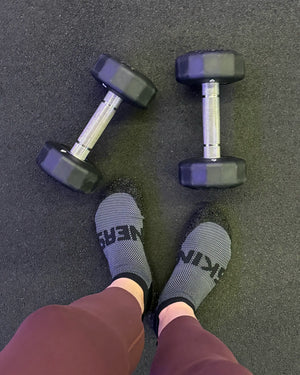
For shorter use around the tent, comfort was rated highly. Essentials 2.0 were handy while preparing food, moving around the campsite, sitting by the fire or walking down to the water.
The sole separates the foot from soil, small twigs and pebbles, while still keeping contact with the surface. On grass and softer soil, walking in them felt natural.


Grass, sand and fine gravel
On grass and soil, grip was very good. On sand and fine gravel, foot protection was also sufficient for shorter use. Small stones and normal unevenness were not as unpleasant as walking barefoot.
The surface underfoot is still clearly felt, though. A larger or sharper stone therefore does not disappear entirely. For the beach, camping and shorter walks this trade-off worked well; for demanding rocky terrain, sturdier footwear is a better choice.


Use in water and on a rocky bottom
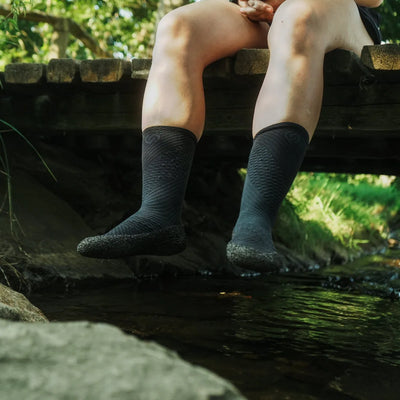
In water, Essentials 2.0 performed very well. They held on the foot and, when walking on a rocky bottom, offered considerably more protection than bare feet.
Water drained quickly after stepping out and the wet material was not unpleasant during shorter wear. The heel stayed in place and even when moving through water there was no sense that the sock-shoes wanted to come off.
On smooth wet rocks you still need to walk carefully. No soft footwear can completely remove the risk of slipping. On an ordinary rocky bottom, though, footing felt secure.


Sand inside, the removable insole and drying
When walking on sand or in water, fine sand can get inside. Some of it stays around the foot and some collects under the removable insole.
After use it is therefore worth taking the insole out, shaking or rinsing the sock-shoes thoroughly and letting both parts dry separately. That speeds up drying and cleans the inside better.
The insole was comfortable both dry and after getting wet. Drying in the sun, both pairs were dry by the next day. After repeated wear a mild odour appeared, so it is important to air and dry the sock-shoes properly after use.
Packability and the storage pouch
Packability is the strongest feature of Essentials 2.0. The sock-shoes roll up easily into a small bundle that fits among other gear or into a side pocket of a backpack.
The storage pouch is also useful on the way back from the water or from a campsite. Wet or dirty sock-shoes do not have to be packed directly among clothes.

Comparison with Skinners 2.0 Comfort
The reviewer has been using the older Skinners Comfort 2.0 for some time, so he could compare both models directly. Comfort 2.0 are easier for him to put on, they suit him better around the instep and they crease less while walking.
Essentials 2.0, on the other hand, sat pleasantly around the ankle, held the heel securely and performed very well in water. So there is no universal ranking of the models. The outcome will always depend on foot shape, instep height and the right size choice.
For the reviewer's foot, Comfort 2.0 feels more natural. Essentials 2.0, however, made very good sense as packable footwear for camping, the beach and the water.
What worked well in testing
- Very small packed volume.
- Good hold on the foot in water.
- Protection from small stones on the bottom.
- Comfort during shorter use around the tent.
- Pleasantly close-fitting cuff around the ankle.
- Removable insole that makes cleaning and drying easier.
- Storage pouch for keeping wet or dirty footwear separate.
What to keep in mind
- Essentials 2.0 were harder to put on over the instep than Comfort 2.0.
- The looser men's size creased more visibly on the foot.
- With a higher instep it is worth trying the sock-shoes on before buying.
- After walking on sand, the space under the insole needs cleaning too.
- For long hikes and demanding rocky terrain, sturdier footwear is a better fit.
- After getting wet, it pays to take the insoles out and dry them separately.
Practical recommendation: When choosing a size, do not add the usual extra room you would with hiking boots. Sock-shoes are meant to fit closely on the foot. If you are deciding between two ranges, this experience suggests giving careful thought to the smaller one.
Who Skinners Essentials 2.0 make sense for
Essentials 2.0 fit best into the kit of someone looking for light, packable second footwear. They suit camping, walks down to the water, the beach, travelling and rocky bottoms where you would rather not go barefoot.
They can also be a good choice for people who want to keep a natural contact with the surface and do not need the firm support of a regular shoe. For a long full-day hike, demanding terrain, or anyone who needs a stable shoe construction, a more robust solution is a better fit.
Frequently asked questions about Skinners Essentials 2.0
Are Skinners Essentials 2.0 suitable for water?
In this test, yes. They held on the foot and protected the feet when walking on a rocky bottom. After use you need to take the insole out, remove the sand and let both parts dry thoroughly.
How do I choose a size?
Sock-shoes should fit closely without unnecessary extra room. When deciding between two size ranges, this experience suggests giving careful thought to the smaller one. Instep height matters as well, though.
Are they suitable for a higher instep?
Putting them on over the instep was harder than with Comfort 2.0. For people with a markedly higher instep we recommend trying them on first.
Can they be used for hiking?
For shorter walks and softer surfaces, yes. As the main footwear for a long hike, a multi-day trek or demanding rocky terrain, a sturdier model is a better choice.
How quickly do they dry?
With the insoles taken out and dried in the sun, the sock-shoes were dry by the next day. Drying time will depend on temperature, airflow and how wet they got.
Does sand get inside?
Yes, fine sand can get inside and under the insole. After use the sock-shoes need to be shaken out or rinsed thoroughly.
Conclusion
In practical testing, Skinners Essentials 2.0 proved to be packable additional footwear for specific situations. What convinced us most was the small volume in a backpack, the secure feel in water and the foot protection on a rocky bottom.
The most attention needs to go to size choice and instep shape. On the looser men's version the material creased more, while the smaller women's version sat more naturally. For the reviewer's foot, the Comfort 2.0 cut remains more comfortable and easier to put on.
As the main footwear for a full day of hiking, a sturdier model is a better choice. For camping, the beach, the water or as a light second pair while travelling, Essentials 2.0 do their job well.
Source of the practical testing
This text is based on practical testing and experience from Outdoor-Recenze.cz. Prepared in cooperation with Outdoor-Recenze.cz on the basis of practical testing of the Skinners Essentials 2.0 sock-shoes.
Photos: Outdoor-Recenze.cz / Tom H.
More articles
Stylish Winter: Discover Skinners Women’s Barefoot Shoes!Finding stylish winter barefoot shoes sometimes feels impossible. No...
Read article ABOUT SKINNERS
First of all, we want to apologise to all our customers and supporters. The Skinners autumn and winter barefoot collection is r...
Read article BAREFOOT START
You know the feeling: in the morning, you put on shoes that look great, but after a few hours, your feet are already begging fo...
Read article